

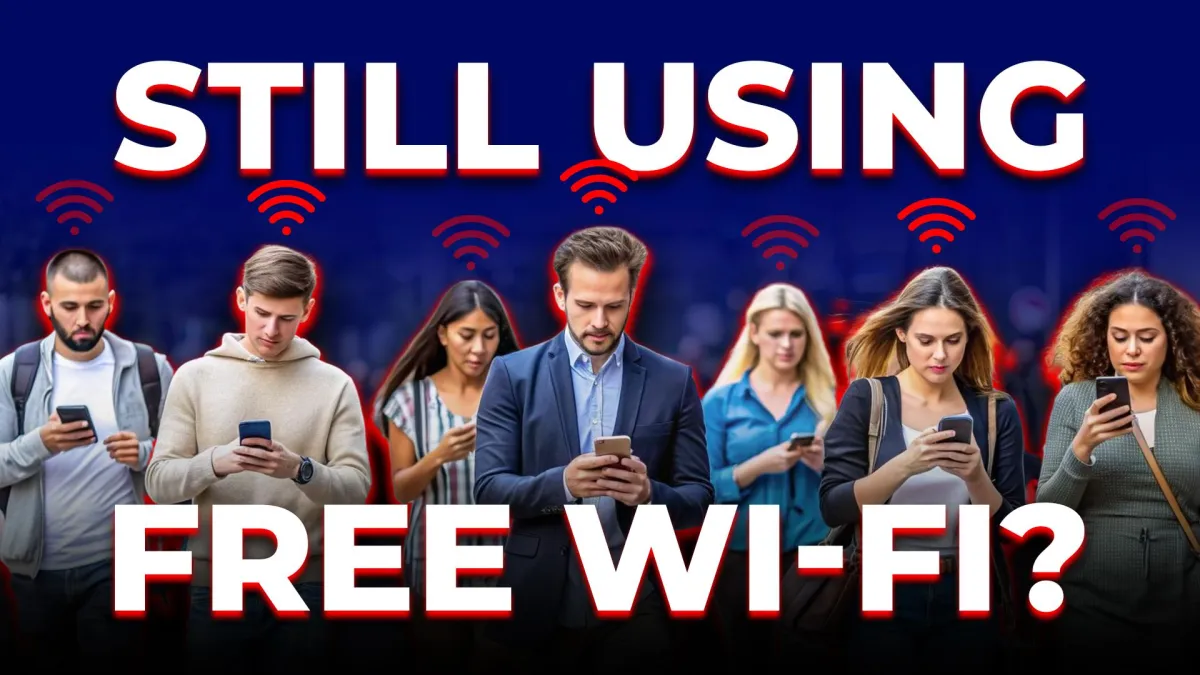
The Free Wi-Fi Lie
Let’s be real: free Wi-Fi feels like a gift.
Airports, hotels, coffee shops.. it’s everywhere. You tap, you connect, you’re online. Easy.
But here’s the truth. What’s convenient for you is even more convenient for hackers.
And public Wi-Fi doesn’t just hand over a signal. It can hand over your passwords, your emails, even your business files. All while you sip your latte, none the wiser.
Think of public Wi-Fi like an unlocked front door in a crowded city. You’re not the only one walking in.
Step 1: Understand How They Get You
Hackers don’t need magic tricks. They just need you to connect.
Man-in-the-Middle Attacks → Imagine having a private phone call, except a stranger quietly lifts the receiver and listens in. That’s what happens when attackers intercept your data in real-time. Logins, payments, conversations; stolen while you think everything’s normal.
Fake Hotspots → Ever see “Free Airport Wi-Fi” pop up and connect without thinking? Sometimes that’s not the airport. It’s a hacker running a fake network, waiting for you to log in so they can watch everything you do.
The bottom line? Free Wi-Fi is like free candy in a stranger’s van. It looks harmless. Until it isn’t.
Step 2: Carry Your Own Safety Net
Public Wi-Fi is optional. Security isn’t.
Use Your Hotspot → Your phone can be your own private Wi-Fi. No strangers, no eavesdropping, no surprises. It might eat some data, but it beats leaking your bank password to the guy three tables over.
Use a VPN → Think of it as a tunnel. Everything you send goes through it, encrypted. Hackers can see you’re online, but not what you’re doing. It’s invisible ink for your internet traffic.
Stick to Trusted Networks → If you absolutely must use public Wi-Fi, at least pick one that requires a password from a reliable source. Hotels, verified lounges, or official cafes. But even then, don’t trust it with your banking app.
Step 3: Build Habits That Travel With You
Good security isn’t just tools. It’s habits.
- Don’t auto-connect. Your device will happily join any network that looks familiar. That’s how fake hotspots win.
- Don’t do sensitive stuff. Save banking, payroll, and private files for a secure connection. If it’s urgent, use your hotspot or VPN.
- Update before you leave. Those software updates you ignore are the locks on your digital doors.
- Log out. Leaving accounts open is like leaving your laptop on a café table and walking away.
- Enable tracking and wipe. Worst-case scenario: if you lose your device, you can nuke the data before anyone else gets it.
The Bottom Line
Travel should be about where you’re going, not who’s watching your data.
Public Wi-Fi is built for convenience, not for security. And every time you use it without protection, you’re betting your information against someone else’s curiosity. Spoiler: hackers have more time than you do.
Here’s the move: pack your VPN, use your hotspot, and practice a few smart habits.
Do that and you can explore the world without leaving your digital life unlocked.

